
Green School
Overview
A school on a hillside in Yewalewadi does not need to teach environmental science from a textbook alone. The site itself — its water, its soil, its birds and its afternoon sun — is the syllabus.
Our Green School programme is deliberately unglamorous: measure what the campus consumes, reduce it, compost what it throws away, plant what will survive here, and let the children run most of it.
On this section
One page, set out in full below.
The school office is happy to answer a question or arrange a visit during school hours.
Contact & visitOur commitment
To hand our children a campus in better condition than we found it, and the habits to do the same wherever they go next.
Six areas we work on
Energy
Rooftop solar generation with power backup, LED lighting throughout, and classrooms designed for cross-ventilation and daylight so that fans and lights stay off for much of the day.
Water
Rainwater harvesting from the roof area, low-flow fittings, periodic testing of drinking water, and a leak-reporting duty held by the Eco Club.
Waste
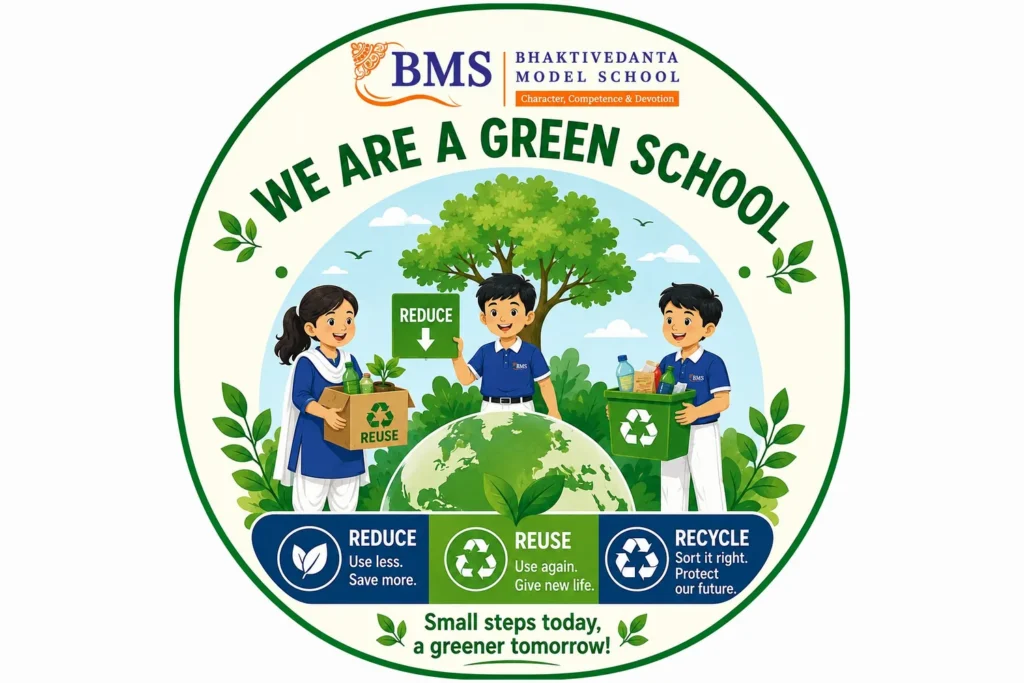
Segregation at source in every classroom, composting of garden and food waste on campus, paper recycling, and a firm no-single-use-plastic rule.
Green cover
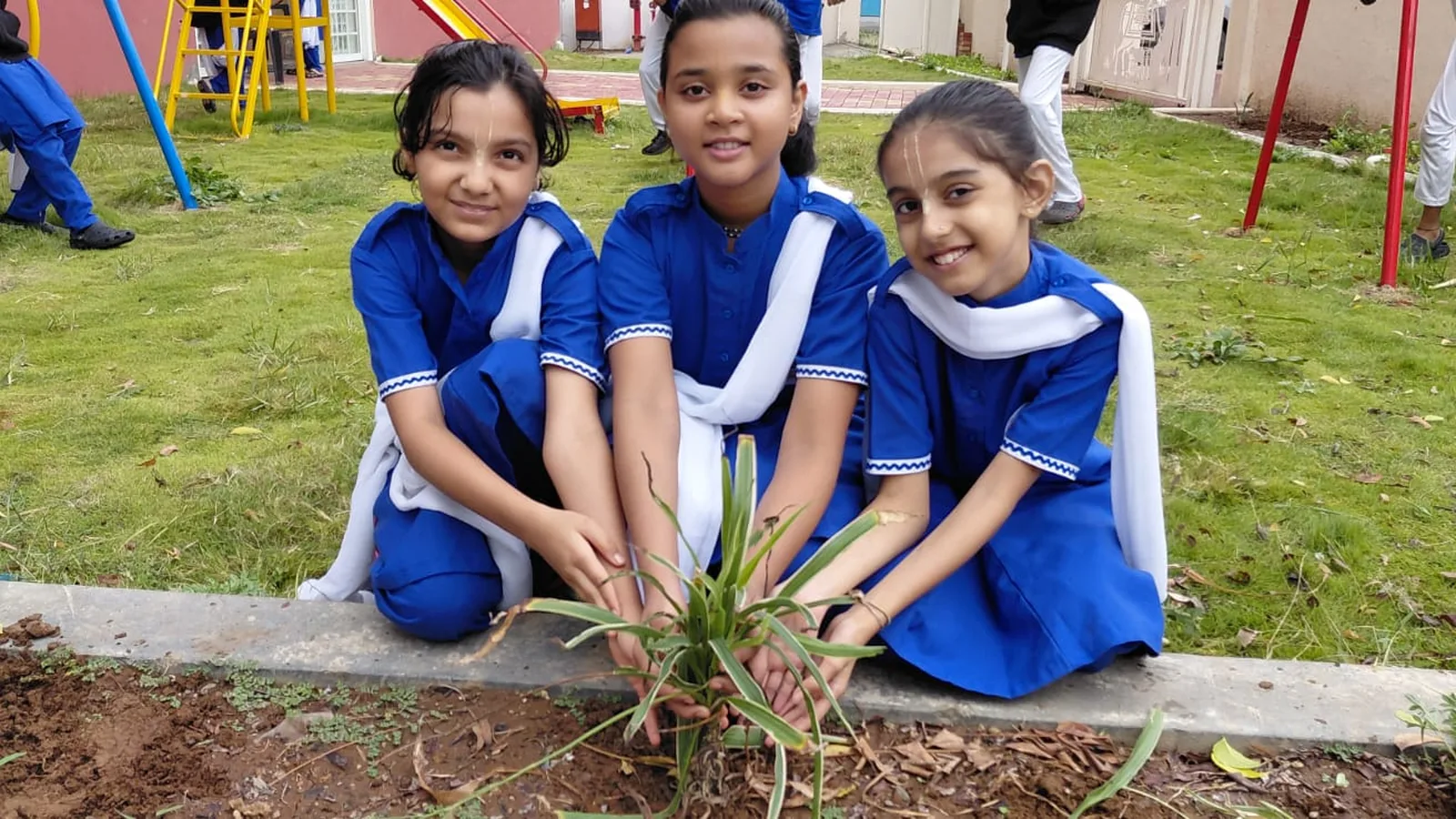
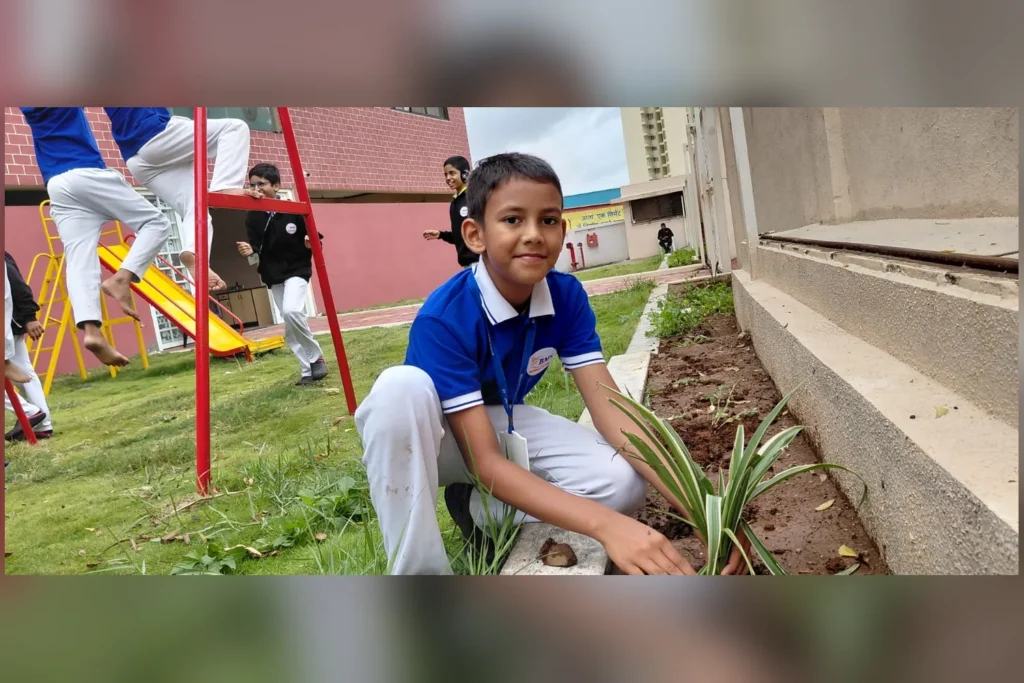
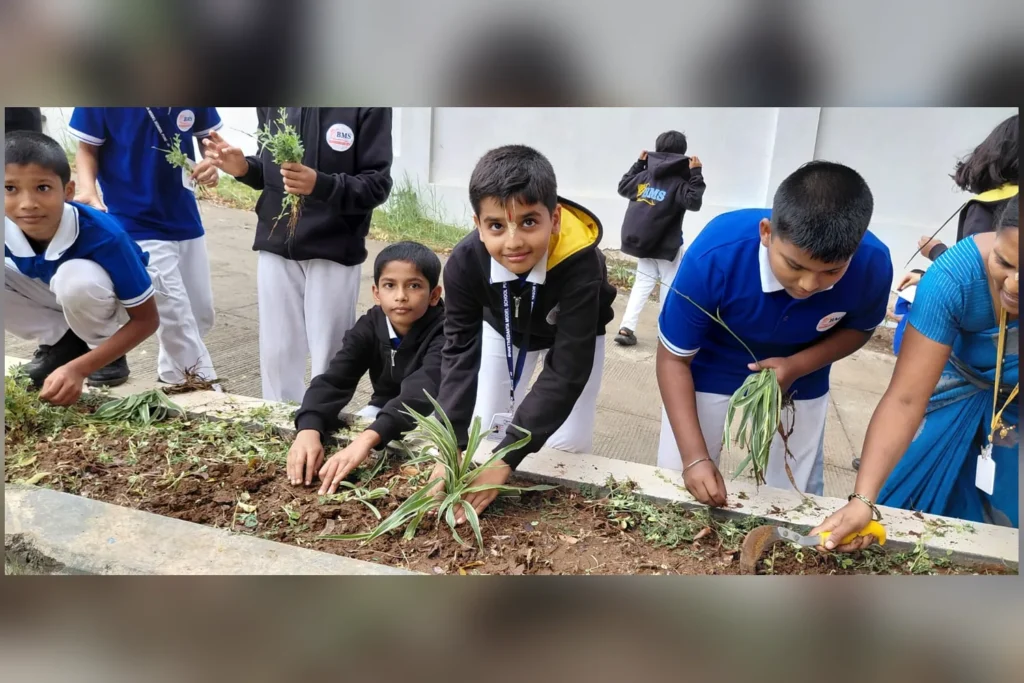
A school garden and kitchen patch tended by the children, native and drought-tolerant planting along the boundary, and a tree planted for every graduating child.
Biodiversity
Bird and butterfly counts on the campus, a labelled plant trail, nesting boxes and water bowls, and a seasonal record maintained by the senior children.
Awareness
Environment education across subjects, an annual green audit presented to the school, cleanliness drives in the surrounding lanes, and campaigns the children design themselves.
The annual green audit
Senior children carry out the audit themselves each year and present the findings to the whole school. It is the reason the programme has numbers behind it rather than intentions.
-
Measure
Electricity and water consumption, waste generated by category, and the campus tree and plant count.
-
Compare
Read this year against last year, per child, and identify where consumption rose and why.
-
Act
Set two or three specific targets for the year — a fitting to change, a habit to shift, a patch to plant.
-
Report
Present to the school in assembly and to parents at the exhibition, and publish the summary here.
What children actually do
- Run the classroom segregation bins and the compost pit
- Tend the school garden and the kitchen patch, and harvest from it
- Carry out the bird, butterfly and tree counts each season
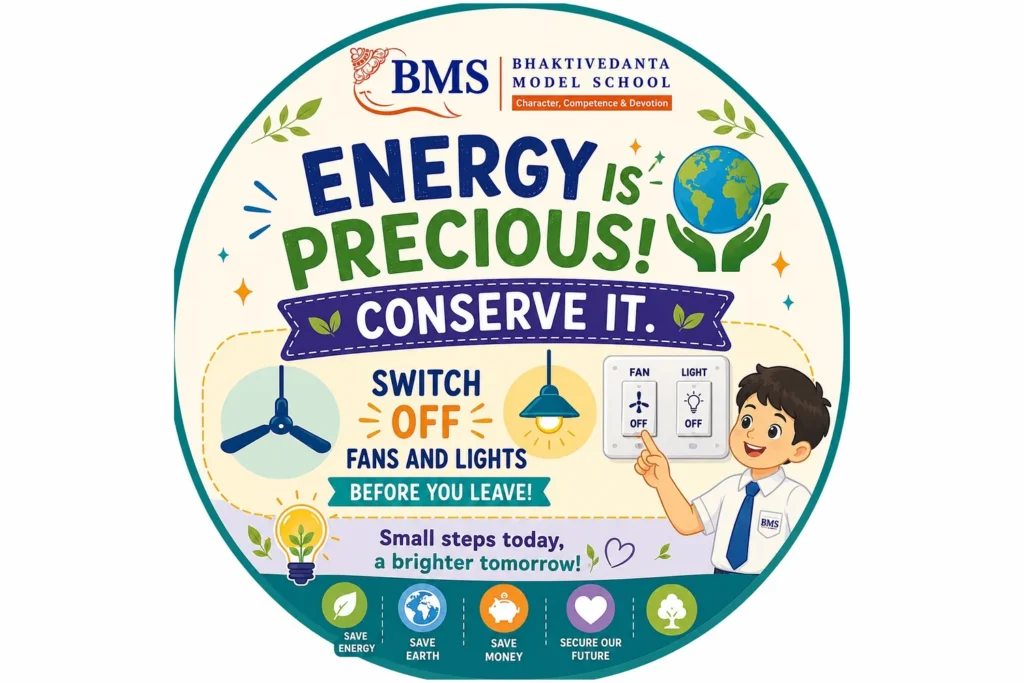
- Switch off duty — lights and fans at every changeover and dispersal
- Design and run the campaigns: cloth bags, no-plastic pledges, water saving
- Plant and name a tree in their final year at the school
Outdoors on the campus
A child who has composted their own lunch waste for a year does not need to be persuaded about landfill.
Working towards recognition
We are documenting the campus against the Green School Programme audit framework, with the intention of applying for certification once we have three consecutive years of measured data.